
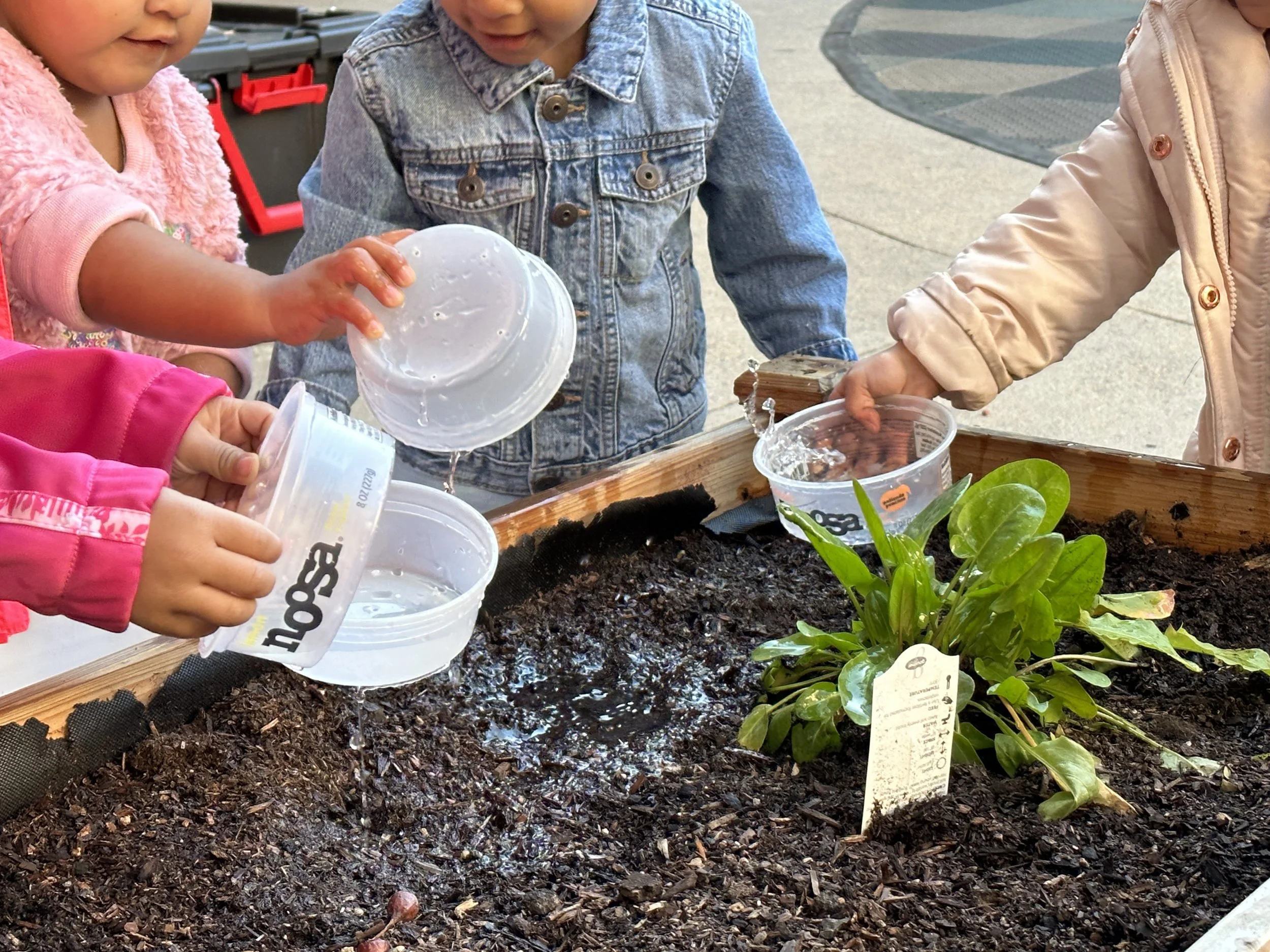
“All hands on dirt!” It could easily be the rally call of a Ground Education school garden, a place where kids get to do what kids love: explore nature and be outdoors alongside their classmates.
While our lessons are designed to engage each individual student, the garden also creates plenty of opportunities to work together and share in the fruits (or vegetables) of that effort. Learning to collaborate is an important life skill, and every garden task offers a chance to connect with others
A Role for Everyone
Whether they're planting seeds, watering, pulling weeds, harvesting, or simply keeping their green space looking good, students are often working together at different tasks.
The students who plant seeds in the school community garden may be in a different grade by the time they sprout, and another class might be the one to harvest what grows. Fifth graders plant a variety of popping corn in the Spring, for example, to leave a gift for next year’s class. First graders, who plant snap peas, harvest and save the seeds for future first graders to plant. Meanwhile, the fourth graders might be helping compost the leftover tendrils, stalks, and pods. It's a team effort that can stretch across an entire school, with each group building on what the last one started.
Along the way, students get to try different jobs, discover what they enjoy, and learn skills that boost their self confidence. The best part? Everyone gets to share in the results.
Practicing Interpersonal Skills
The garden has a way of bringing out different sides of kids. Sometimes, a student who's quiet in the classroom becomes the one to jump in and interact. They might find themselves working with classmates they don't normally talk to, simply because they're both interested in the same bug, plant, or garden project.
Teachers experience this, too. When everyone is working side by side, the usual classroom roles soften a little. There's more room for conversation, discovery, and the occasional laugh—new perspectives on ways kids learn are revealed.
Gardening also gives students plenty of everyday opportunities to practice getting along. They learn to share tools, take turns, ask for help, and lend a hand when someone needs it. They work toward a common goal and get to see what happens when everyone does their part.
And often, the lessons travel home. Parents have shared that their children's garden experiences spark conversations about eating healthier, being more sustainable, or even starting a garden at home. We've heard plenty of stories about kids coming home excited about finding worms or trying their first radish. Enthusiasm abounds! And for grandparents who love to garden, it's one more thing they can share with their grandkids.
An Inclusive Environment
No tests, no pop quizzes, no grades. Who doesn’t appreciate that?
Ground Ed’s school garden program offers a place where kids can participate in different ways, without feeling that there's just one right way to learn or get involved. Some enjoy organizing and planning, others love the creative side of things, and some are happiest with a task that involves getting their hands dirty. There are opportunities for kids who learn by seeing, touching, moving, and doing.
For students who find traditional classroom settings challenging, nature can offer a different kind of experience. They have room to explore, be curious, and contribute minus the same structure or expectations.
Not every student will love planting, and that's okay. Some might prefer watering, some might be fascinated by the insects, and others might take pride in keeping the garden tidy. There's a job for everyone, and every contribution counts.
Creating Community
One of the things teachers appreciate about the garden is how easily it connects with what's happening in the classroom. Fractions, for example, become a lot more interesting when students are mapping out garden beds or cutting an orange into equal pieces. Lessons that might seem abstract indoors suddenly come to life outdoors.
The garden also gives students a chance to see their teachers in a different light. There's something about discovering a freshly grown carrot or smelling a sprig of lavender together that makes learning feel a little less formal and helps build relationships.
Even the Nutrition Services team gets involved by sharing produce that ties in with Ground Education lessons. Students might sample a fruit or vegetable in the garden, then choose it from the school lunch menu the following week. It's a fun way to introduce new foods and an effective way to broaden their palates.
And the community extends beyond the classroom. Ground Education hosts back-to-school and open house gatherings in the gardens, bringing families, teachers, school staff, and friends together to share in the experience.
At the end of the day, a school garden grows more than fruits, vegetables, and flowers and teaches topics beyond STEAM concepts. It gives kids a place to connect, try new things, help one another, and feel part of something bigger.
