
Nature Nurtures: How School Gardens Are Rooted in Well-Being
“My brain hurts!”
“When is recess?”
“Will I ever use this in real life?”
Teachers and parents, you’ve likely heard at least one of these from a student during the sometimes-arduous process of learning. School can be fun, but even the most eager learners have days when they’d rather be anywhere but a classroom.
That can all change when the “classroom” features bugs, plants, dirt, and sunshine.
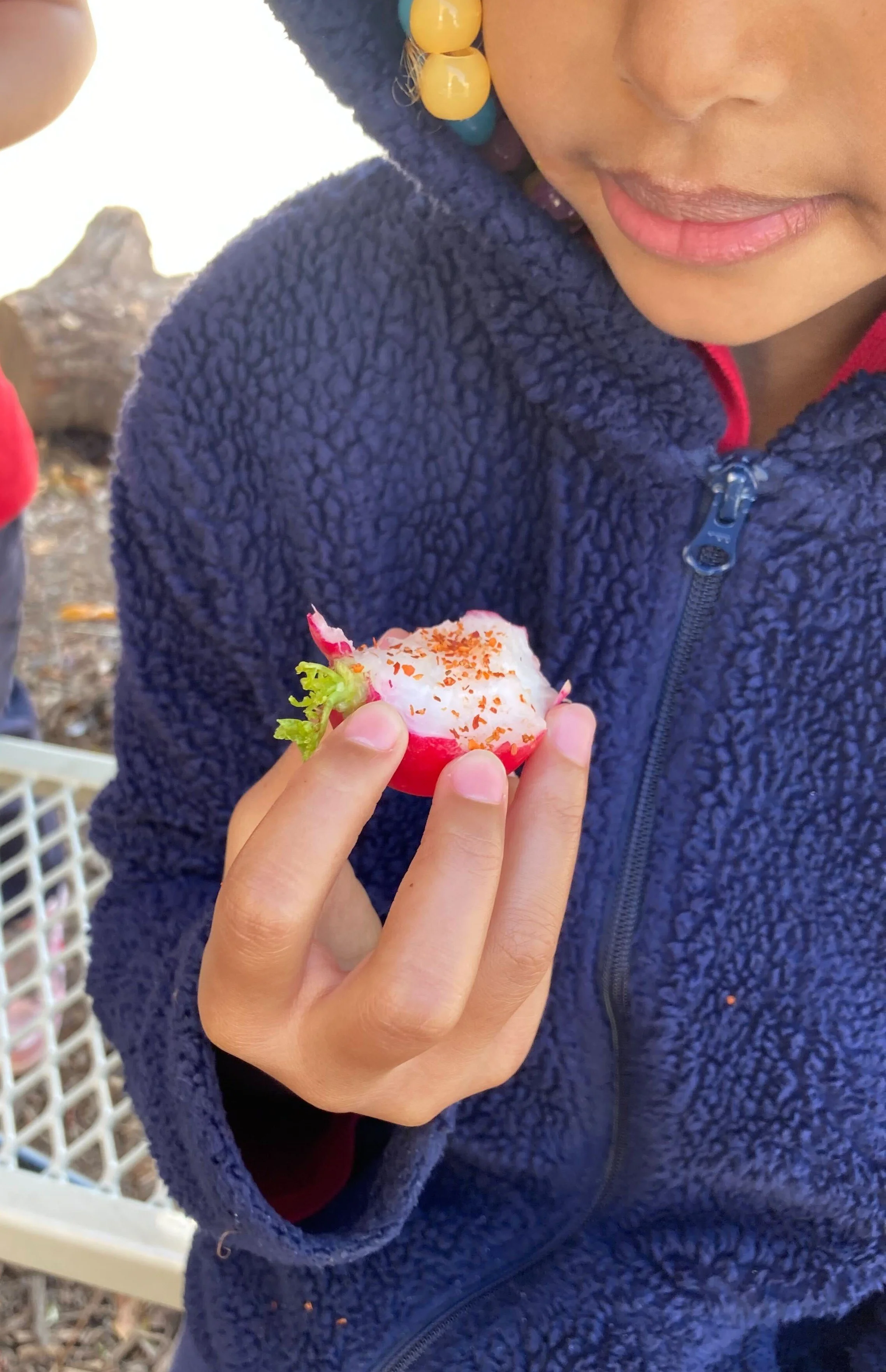
Add a few hands-on activities, and kids suddenly come to life. Learning gets disguised as fun, much like sneaking vegetables into a tasty muffin or a favorite pasta sauce.
But beyond the enrichment that comes from Ground Education’s robust, hands-on approach to learning, school gardens offer something deeper: opportunities to support children’s overall well-being.
That matters now more than ever. As children spend increasingly more time in front of digital devices, we’re also learning how important it is for them to unplug, explore, and get outdoors.
The American Academy of Pediatrics has recognized this connection, noting that “exposure to nature is essential for healthy childhood development and for the physical and emotional health of children and adults.”
Ground Education was founded on this principle. And with 18,000 kids served and counting, we see its relevance every day.
Dr. Tiffany Dawson, a clinical psychologist and director of services with The Guidance Center, a Long Beach nonprofit providing mental health services to children and families, has spent years studying brain development and working with youth who struggle with trauma, mental health challenges, and behavioral concerns. In her work, one of the first things she considers is what may be causing a roadblock to a child’s ability to focus, engage, and interact in a healthy, productive way.
As she recently shared with our team of educators, when a student’s mind is operating from a heightened state of stress, it can be difficult to access the parts of the brain responsible for reasoning, regulating emotions, and engaging in learning. The child may want to learn, cooperate, or connect with a teacher or classmate, but at that moment, their brain is in a different mode.
Stress can come from many sources: challenges at home, poor nutrition, lack of sleep, trauma, or simply feeling overwhelmed. And children aren’t the only ones who experience this. Adults know the feeling, too.
This is where the school garden becomes a place where students can safely pause, regulate, refocus, and reconnect.
Imagine something as simple as:
💧 Watering a bed of vegetables
🍂 Sweeping leaves
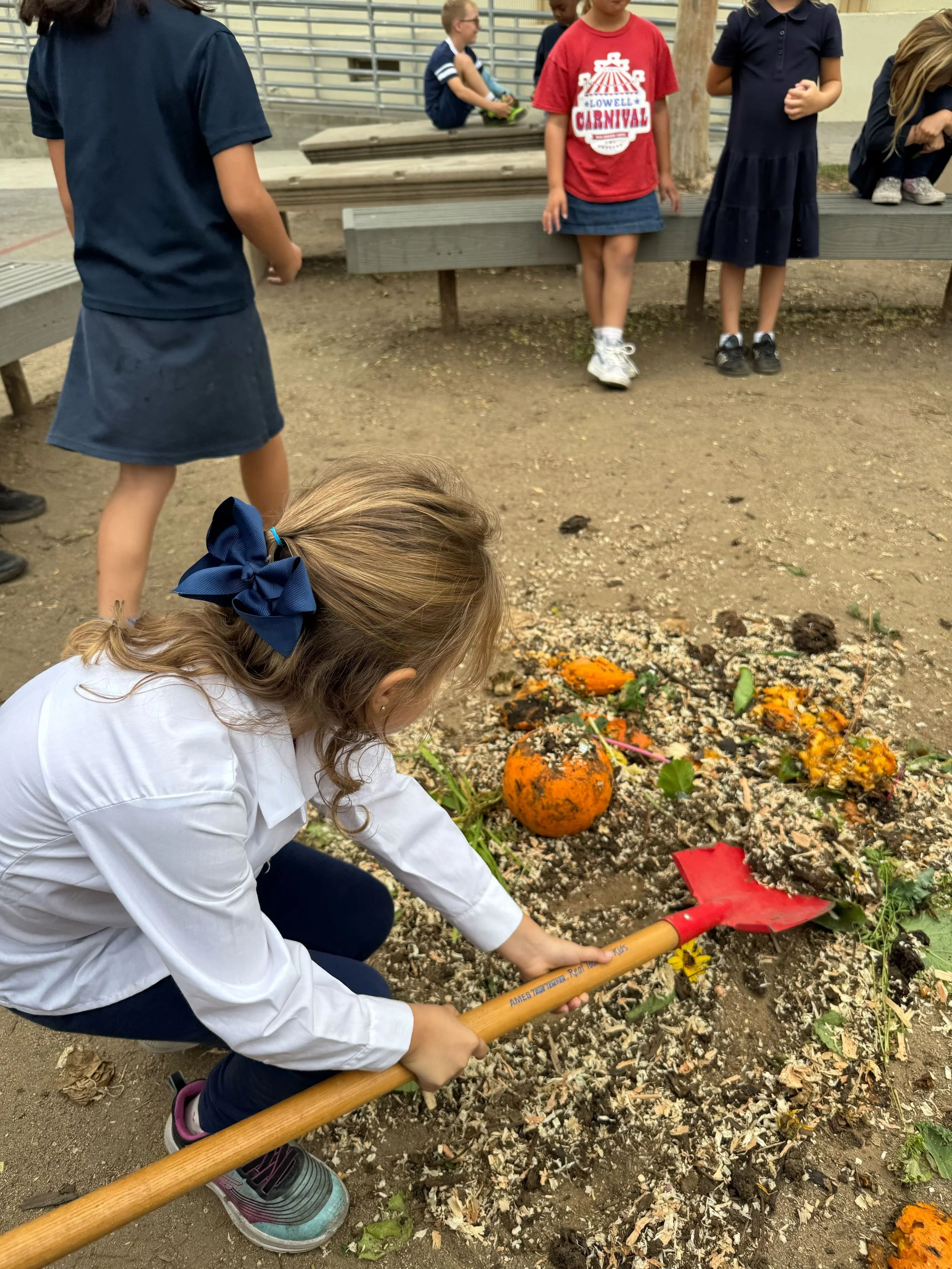
🌱 Digging in the soil
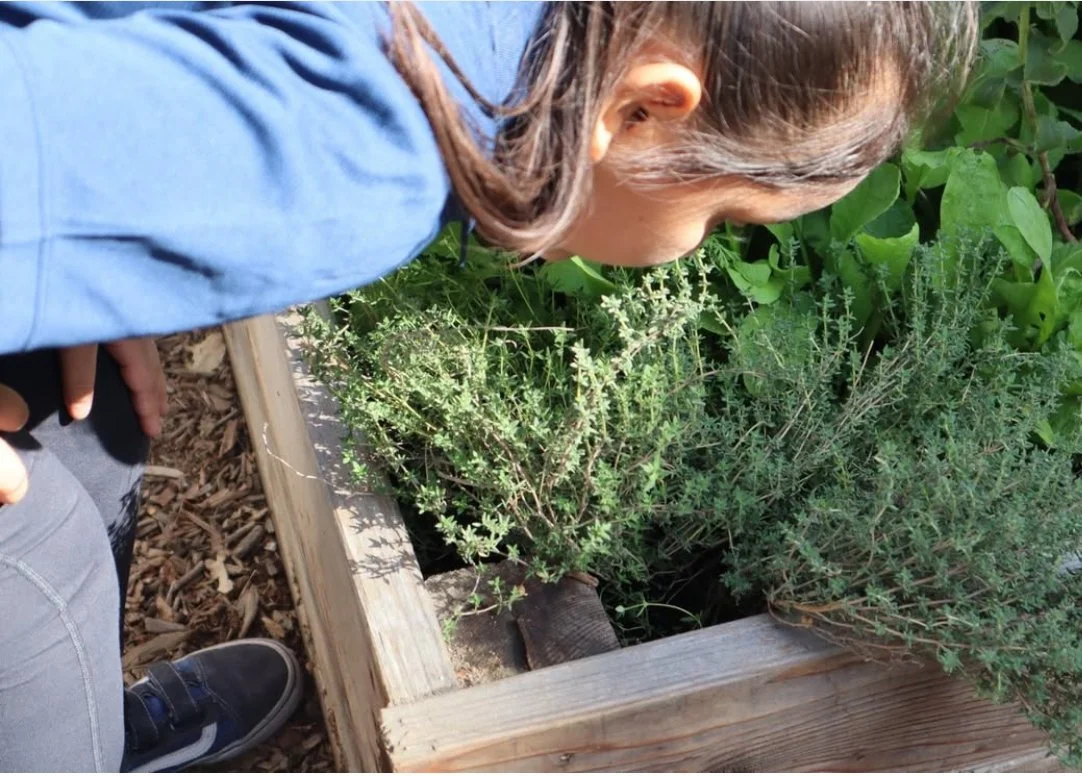
💜 Smelling lavender blossoms
🌻 Counting petals on a sunflower
These activities combine movement, sensory experiences, observation, and focused attention. For a child who is restless or overwhelmed, that combination can provide the ideal opportunity to reset and reengage.
And that’s one of the most powerful things about a garden: it asks us to slow down.
There is no test to take. No screen to scroll. Simply nature, ready for discovery.
In those joyful moments of being outdoors, children aren’t just learning about the environment. They’re truly immersing themselves—and discovering that a little sunshine, dirt, and hands-on work can help nourish the mind as well as the body.
“I have a several students who’ve recently faced tough tragedies--loss of parents, foster situations, and deep anxiety. The school garden is where these students thrived, where the connection with nature and earth grounded them, helping them cope with a tough day,” shared one LBUSD 4th grade teacher whose class regularly looks forward to Ground Ed’s program.
And that’s just one of so many stories and moments of feedback that reinforce the importance of kids having access to safe outdoors, even if for an hour or so.
Ground Education continues living and growing its mission of building healthy futures one seed, one student at a time.
To explore more, check out the Books We Love on our website, where we include some resources that offer a deeper dive into the benefits of being in nature.
